
From the Field to the Office: A Week in the Life at McFadden Engineering
May 7, 2026
Environmental engineering covers more ground than most people may realize. On any given week, the profession involves field work, desk work, client communication and a technical range that keeps the job from ever feeling routine or repetitive.
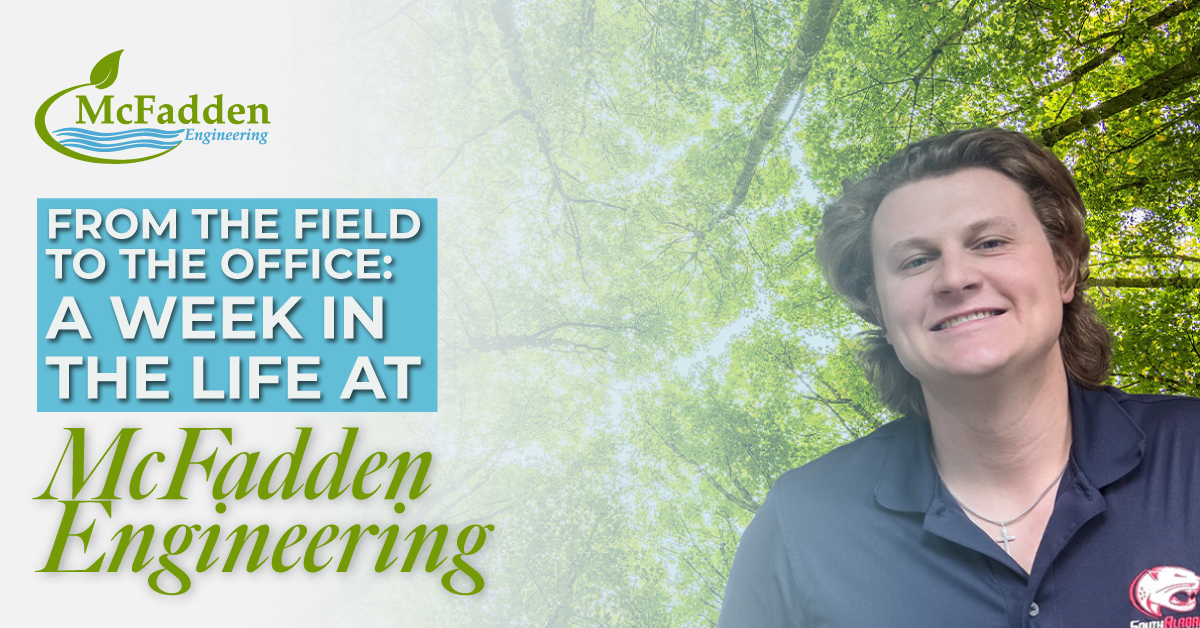
To become more knowledgeable about what the work of an environmental engineer looks like in practice, we talked with McFadden’s very own, Harry McCaskill.
After earning his bachelor’s degree in civil engineering, McCaskill was not ready to stop learning. He decided to pursue a master’s degree in systems engineering, carving out a research focus in environmental science.
McCaskill serves on the McFadden team as a Staff Engineer/Engineer in Training (EIT.) He is currently working toward his Professional Engineer license. In the meantime, he supports the McFadden team and clients through a variety of tasks and projects that environmental engineering is all about.
An Engineer’s Scope of Work
McCaskill splits his time between both field and office work, depending on the day. Most recently, his primary responsibility in the field involves industrial wastewater sampling for a steel mill client. This is a process that requires early morning, on-site operator coordination and precise sample collection and monitoring. In office, the field data must be reported and calculated and solutions designed – work that keeps McFadden projects moving forward. The range is wide: industrial wastewater sampling, stormwater pond design, Best Management Practice (BMP) inspections, erosion control checks, permitting and AutoCAD design work. “Pretty much everything environmental,” he says. “Anything you can imagine, we do it.”
McCaskill was drawn to McFadden Engineering for more than just the job. He was also passionate about the work, as he is an avid outdoorsman who loves to hunt and always feels at home outdoors. He says that environmental engineering lets him be a “conservationist and a steward of the environment.” At McFadden, that is exactly what he is getting to do as a career.
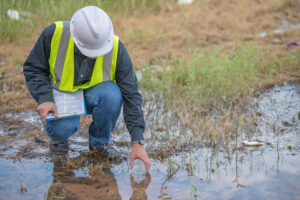
At any given time, McCaskill is managing two to four active projects, each at different stages and requiring differing skills.
The scope of environmental engineering extends well beyond wastewater. McFadden handles the stormwater pond design, BMP inspections, erosion and sediment control and permitting across a wide range of project types.
Collaboration Is at the Core of the Work
Collaboration is a significant part of being on the McFadden Engineering team, both internally and with clients and contractors. On the field side, McCaskill coordinates weekly scheduled check-ins with geologists on his team and communicates directly with wastewater operators on client worksites. Internally, the work involves regular check-ins with engineers and specialists across the office to work through technical questions, review designs and keeping projects on schedule.
I can’t remember exactly what this part of the convo was – I think the geologist is on the McFadden team, and I couldn’t remember what they collaborate on! Can you double check the notes or we can ask Harry when we sent this back to him to clarify!
The Moment the Work Pays Off
One of the most rewarding aspects of his work at McFadden Engineering is seeing a project move from concept to completion, McCaskill noted. He recently designed a stormwater pond for a church development project. This process required multiple rounds of design before the solution was correct and ready for implementation. When the excavation began, the satisfaction of watching the concept and design become a reality made McCaskill’s effort worthwhile. The progression of identifying an environmental need to delivering a compliant solution is what makes work at McFadden Engineering meaningful.
Interested in McFadden’s environmentally sound solutions? Explore our services or contact our team to learn more.